

Buying a Robot Vacuum With LiDAR
A robot vacuum equipped with lidar makes an outline of your home, assisting it avoid obstacles and devise efficient routes. It also can detect small objects that other sensors might overlook. Lidar technology has been used in self-driving cars and aerospace for years.
It isn't able to discern small obstacles, like power wires. This can cause the robot to become caught up in a mess or be damaged.
LiDAR technology
The introduction of LiDAR (Light detection and Ranging) technology has dramatically enhanced the navigation systems in robot vacuums. These sensors emit lasers and measure the time it takes the beams to reflect off of objects within the environment. This lets the robot create an precise map of its surroundings. This helps it avoid obstacles and move efficiently and more efficient cleaning process.
The sensor is able to detect different types of surfaces, including furniture, walls, floors and other obstacles. best robot vacuum lidar can also determine how far these objects are from the robot. This information is used to calculate the best path that minimizes the amount of collisions while covering the space efficiently. Lidar is more accurate than other navigation systems such as infrared or ultrasonic sensors, which are susceptible to interference from reflective surfaces and complicated layouts of rooms.
This technology can be used to improve the performance of many different robotic vacuum models, from budget models to high-end brands. For example, the Dreame F9, which boasts 14 infrared sensors that can detect obstacles with up to 20 millimeters of precision. However, it needs constant supervision and may miss smaller obstacles in tight areas. It is best to buy a premium model with LiDAR, which will allow for better navigation and cleaning.
Lidar-equipped robots also have the ability to recall the layout of the space which allows them to clean more effectively in subsequent cycles. They are also able to adapt their cleaning strategies to accommodate diverse environments, for example, transitions from carpets to hard floors or stairwells.
The best robot vacuums with lidar have wall sensors that prevent them from pinging on furniture and walls when cleaning. This is a common cause of damage, and it can be costly if a robot vacuum damages something during the process. You can disable this feature if do not want your robot to perform this.
Lidar mapping robots are the most advanced technology in robotics that is smart. This sensor, originally used in the aerospace sector, allows for precise mapping and obstacle detection, making it an important addition to robot vacuums. These sensors can be paired up with other intelligent features like SLAM or a virtual assistant to provide a seamless experience for the user.
SLAM technology
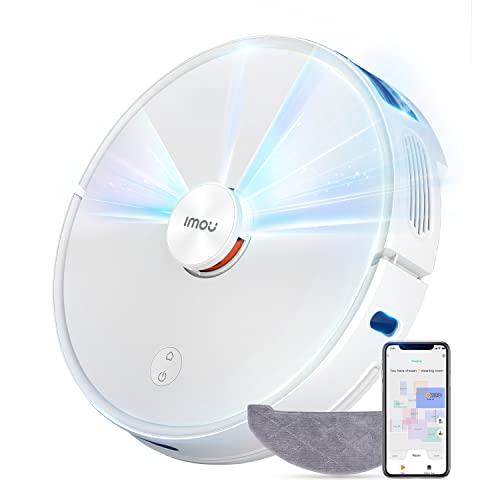
The navigation system that is used in the robot vacuum is an important factor to consider when buying one. A well-designed navigation system is capable of creating superior maps, which will allow the robot to maneuver more efficiently over obstacles. The navigation system must be able to distinguish between objects and detect when an object changes position. It should also be able detect furniture edges and other obstacles. This is essential for a robot's ability to work efficiently and safely.
The SLAM technology, which stands for simultaneous localization and mapping, is a technique that allows robots to map their environment and determine their position within that space. The robot can map its surroundings with sensors like cameras and lidar. In certain instances it is necessary for a robot to update its maps when it encounters a new environment.
Many factors affect the performance of SLAM algorithms which include data synchronization and processing speeds. These factors can affect the way that the algorithm works and whether it is suitable for a particular use case. It is also essential to know the hardware requirements for the particular application before selecting an algorithm.
For instance, a house robot vacuum that does not have SLAM would move randomly across the floor and might not be able detect obstacles. It would also have difficulty "remembering" this, which could be a big problem. It would also consume lots of power. SLAM solves this problem by combining data from several sensors, and incorporating the movement of sensors into its calculations.
The result is a much more accurate representation of the environment. The process is typically carried out using a microprocessor with low power and relies on image matching, point cloud matching, optimization calculations and loop closure. It is also essential to ensure that the sensor is free of dust, sand and other debris that could interfere with the SLAM system's performance.
Obstacle avoidance
The robot's navigation system is essential to its ability to navigate through an environment and avoid obstacles. One technology that can be an excellent asset to the navigation capabilities of these robots is LiDAR, which stands for Light detection and Ranging. It creates a 3D map of the surrounding environment and helps the robot to avoid obstacles. It allows the robots to design a more efficient route.
LiDAR mapping robots utilize more advanced sensors for precise distance measurements. This is in contrast to other robot vacuums which use the traditional bump and move navigation method. They can detect if a robot is close to an object. This makes them much more accurate than traditional robotic vacuums.
The first step of the obstacle-avoidance algorithm is to determine the robot's current position in relation to the target. This is done by computing the angle between thref and the pf at various positions and orientations of the USR. The distance between the robot and the target is calculated by dividing the total angular momentum of the USR and its current inclination by its current angular velocity. The result is the desired distance for the trajectory.
Once the robot has identified obstacles in its environment it then begins to eliminate them by studying the pattern of their motion. It then allocates sequences of grid cells to the USR to move it through every obstacle. This avoids collisions between robots within the same area.
In addition to the LiDAR mapping, this model offers a powerful suction and various other features that make it a great option for busy families. It is also equipped with a camera on board which allows you to view your home in real-time. This is a wonderful feature for families with pets or children.
This high-end robotic vacuum has an astrophotography camera on board that is 960P which can recognize objects on the floor. This technology can help clean up a room more efficiently and effectively as it can identify even small objects such as remotes or cables. However, it is essential to keep the lidar sensor clean and free of dust in order to ensure its optimal performance.
App control
The top robot vacuums have a range of features to make cleaning as easy and convenient as possible. Some of these features include a handle to make it easier to lift the vacuum, as well as an onboard spot cleaning button. Some models have zones and map save-outs to alter the cleaning performance of the cleaner. These features are ideal for those who want to design zones for vacuuming or mowing.
LiDAR mapping technology helps improve the navigation of robot vacuum cleaners. This technology was initially created for the aerospace industry. It utilizes the detection of light and range to create a three-dimensional map of a given space. The information is then used to pinpoint obstacles and plan an efficient route. This allows for faster cleaning, and also ensures that no corners or spaces remain unclean.
Many high-end vacuum robots come with cliff sensors that prevent them from falling off steps or other objects. These sensors detect cliffs by using infrared light reflecting off of objects. They then adjust the path of the vacuum accordingly. They aren't completely reliable and could give false readings when your furniture has reflective or dark surfaces.
Another great feature of a robot vac is the capability to create virtual walls and no-go zones, that can be created in the application. This is a great feature to have if you have cables, wires or other obstructions you do not want your robot vac to touch. You can also create an agenda that your vacuum will automatically follow. This means that it won't miss any cleaning sessions or forget about the room.
If you are looking for a robotic vacuum with advanced features, then the DEEBOT OMNI from ECOVACS may be just what you need. It's a robust robot vacuum and mop combo that can be operated with the YIKO voice assistant, or connected to other smart home devices for hands-free control. The OMNI IAdapt 2.0 intelligent map system utilizes lidar technology to eliminate obstacles and plan a route to help clean your home. It comes with a full-sized dust bin and a 3-hour battery.